Gypsum Cost Benefit Analysis
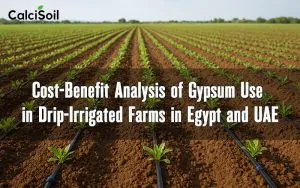
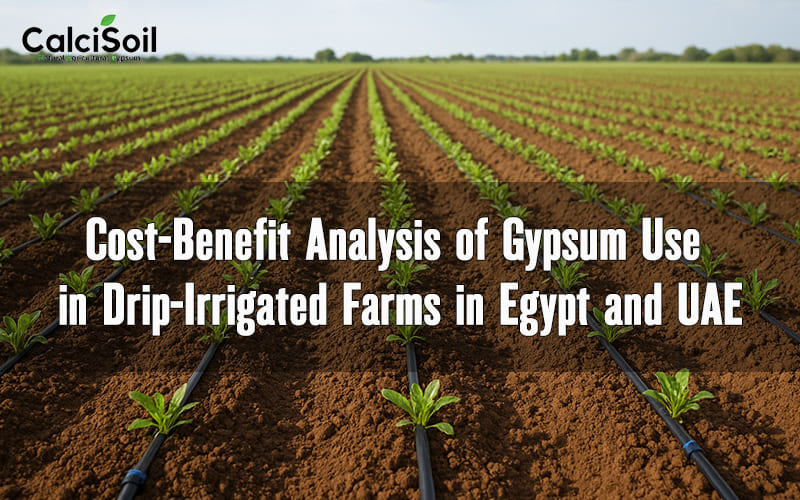
Drip-irrigated agriculture in Egypt and the UAE has expanded rapidly over the past two decades as farmers seek high-efficiency irrigation solutions suitable for arid climates. However, with the growing reliance on groundwater and marginal-quality irrigation sources, soil salinity and structural degradation have become major limitations.
This challenge has pushed many growers to adopt agricultural gypsum—a natural calcium sulfate amendment—to improve soil performance and enhance long-term productivity. Understanding the gypsum cost benefit balance use is essential for farmers aiming to reduce losses and increase returns under desert farming conditions.
Why Gypsum Matters in Drip-Irrigated Soils
Soils irrigated through drip systems often experience salt accumulation near the emitter zone as water evaporates from the wetted circle. Over time, this leads to crusting, reduced infiltration, and restricted root growth. The presence of sodium further deteriorates soil structure, causing compaction and poor aeration.
Here, the role of gypsum for soil improvement becomes significant. Gypsum supplies soluble calcium, which rehabilitates soil exposed to salinity and sodicity. Calcium displaces sodium from soil particles, restoring aggregation and improving the ability of water to penetrate deeply rather than pooling on the surface. Farmers using gypsum fertilizer report improved root development, better water use efficiency, and healthier plant vigor.
Economic Benefits of Agricultural Gypsum
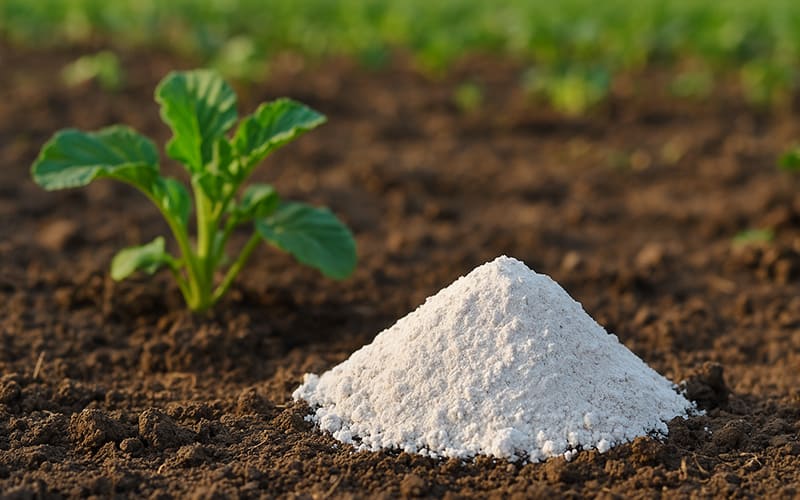
The primary reason many growers invest in agricultural grade gypsum is the rapid and measurable economic return. Better soil structure means that irrigation water moves efficiently into the root zone, reducing losses from evaporation and surface runoff.
In regions like Egypt’s reclaimed desert lands or the UAE’s sandy farms, where water is one of the most expensive agricultural inputs, even a 10–15% improvement in water efficiency can significantly reduce production costs.
Moreover, improved calcium availability strengthens plant cell walls, enhances nutrient uptake, and reduces stress from salinity. These combined effects result in higher yields and improved product quality for crops such as vegetables, dates, berries, wheat, and forage crops. The relatively low cost of gypsum powder compared to other soil amendments makes it a high-value investment for large-scale farms.
Cost Considerations for Gypsum Application
The total cost of using agricultural gypsum varies depending on the soil’s salinity level, application method, and farm size. Gypsum can be applied as bulk powder, pelletized gypsum, or soluble gypsum for integration into fertigation systems.
Transport and spreading are the primary cost factors, especially for large farms. However, even with these expenses, gypsum remains one of the most affordable tools for soil remediation. When compared to alternatives like soil replacement, desalination, or chemical conditioners, gypsum offers superior long-term cost efficiency.
In drip-irrigated systems, farmers often choose soluble gypsum, which can be injected directly into the irrigation line. While slightly more expensive per ton, soluble forms reduce labor costs and ensure uniform distribution in the wetting zone. This precision application maximizes the return on investment while minimizing material waste.
Long-Term Benefits: More than Just Salinity Control
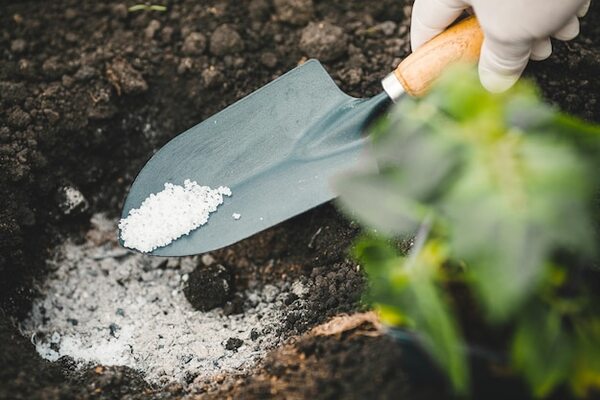
The benefits of agricultural gypsum extend beyond immediate salinity management. Over multiple seasons, farmers experience improvements in soil tilth, microbial activity, and root zone aeration. These changes reduce compaction and enhance the soil’s ability to store water, which is particularly valuable in sandy soils that dominate UAE agriculture.
Gypsum also contributes to stabilizing soil pH, improving nutrient availability, and reducing the toxicity of elements like aluminum in certain soil types. The cumulative effect is a healthier, more resilient farm system capable of sustaining high yields with lower input requirements. For growers in Egypt and the UAE, where farming costs are rising, these long-term benefits translate into better profitability and reduced risk.
When Gypsum Offers the Highest Financial Returns
Gypsum is most economically impactful in three main situations:
- Farms using moderately saline water
Drip systems using groundwater with EC levels above 2 dS/m benefit greatly from gypsum, as calcium counteracts the structural damage caused by sodium accumulation.
- Farms with sandy or compacted soils
Gypsum enhances aggregation, increases water retention, and improves fertilizer use efficiency—important where nutrient leaching is a challenge.
- High-value crop production
Vegetables, fruit trees, and greenhouse crops respond strongly to improved soil structure, delivering yield increases that quickly outweigh the cost of gypsum.
In all these cases, the return on investment becomes evident within one growing season, making gypsum a cornerstone amendment for sustainable desert agriculture.
Conclusion
The gypsum cost benefit analysis in drip-irrigated farms across Egypt and the UAE clearly shows that gypsum is not just a soil amendment—it is a long-term investment in agricultural stability.
By improving soil structure, enhancing infiltration, reducing salinity, and increasing nutrient-use efficiency, gypsum delivers measurable gains in both crop yield and water savings. These benefits are especially valuable in arid regions where water scarcity and soil degradation threaten farm profitability.
While the initial cost of gypsum powder may seem significant, the long-term economic return—through reduced fertilizer losses, lower maintenance costs, fewer soil reclamation operations, and more consistent yields—far outweighs the expense. For farmers seeking a sustainable, cost-efficient solution for improving soil health, gypsum stands out as one of the most effective and reliable amendments available.
Ultimately, incorporating gypsum for soil into drip-irrigated systems helps farmers build resilient, productive, and economically viable farms, ensuring long-term success in the challenging climates of Egypt and the UAE.